
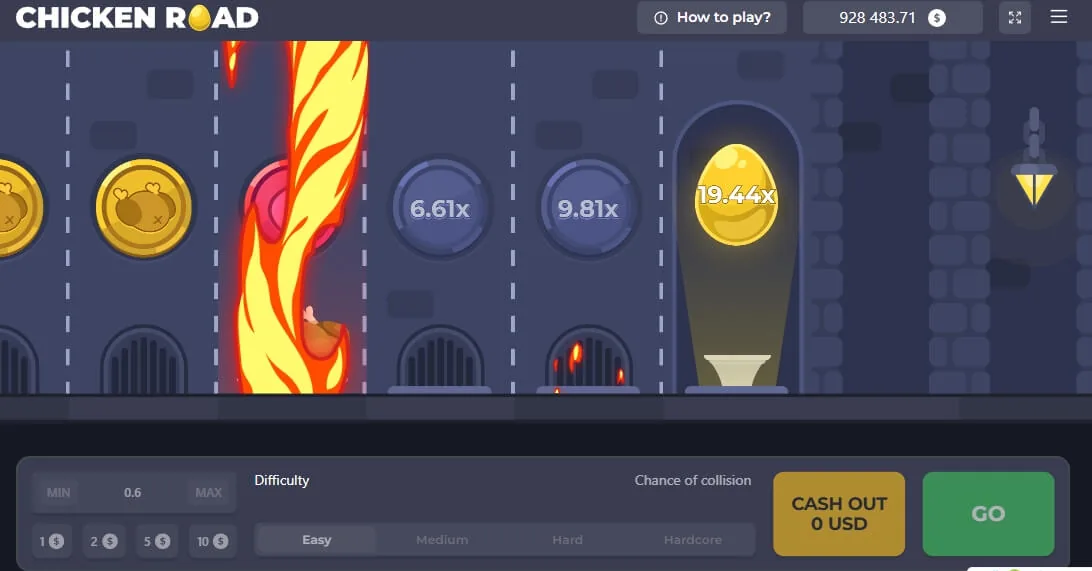





 Chicken Road 2
InOut's Chicken Road 2 reimagines the pedestrian-crossing arcade as a betting challenge. A white hen faces a six-lane highway dotted with manhole multipliers. Your job is to decide when to push forward and when to collect—no reels, just nerve and timing.
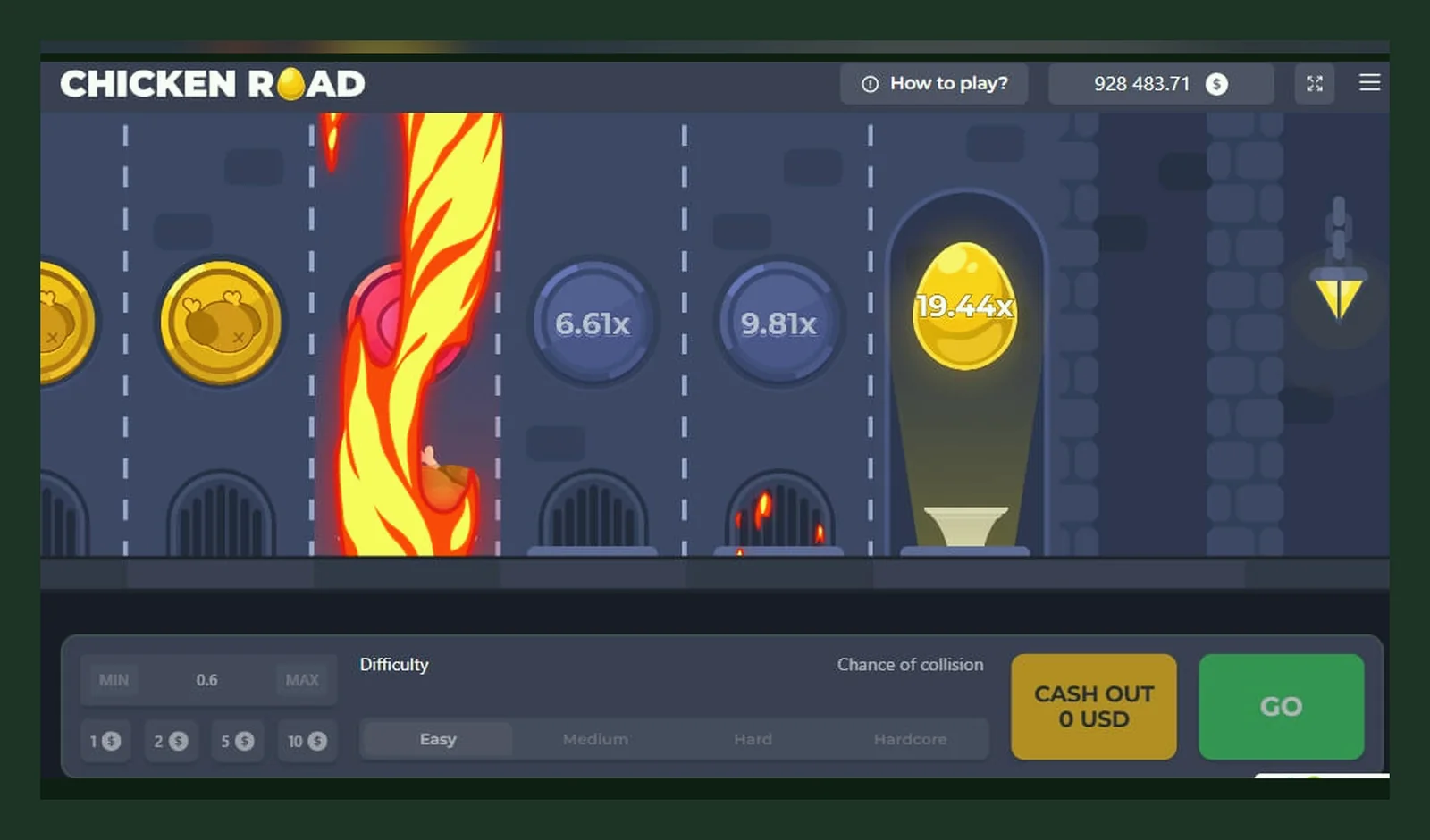
Demo access · no account · no payment details
InOut's original Chicken Road shares the blueprint: a bird hops across traffic, each cleared strip boosts the multiplier, and you pick the moment to bank. The same four lane counts appear—30, 25, 22, 18—and multipliers begin at 1.01×. The difference lies in presentation: backdrop, vehicle tempo, and visual layout all shift.
See Chicken RoadManholes occupy each lane, marking multiplier checkpoints from left to right. Lane one starts at 1.01×, climbing through 1.03×, 1.06×, 1.10×, 1.15×, and topping out at 1.19× in lane six. Successfully reaching a checkpoint compounds your wager by that lane's factor, so deeper advances yield steeper returns.
A turquoise vehicle patrols lane six, adding a timing puzzle. Collision forfeits your round and any uncollected balance. The choice becomes stark: chase the higher multiplier or lock in what you've built.
Each setting reconfigures the total crossing distance by changing available road strips:
Wagers span £0.01 to £200, shaping potential returns. Quick-bet buttons sit at 50p, £1, £2, and £7. A £7 stake that clears lane six stands around £8.70 before further crossings are factored in.
The real leverage comes from chaining successful hops. Ten strips cleared on Medium difficulty with a £2 bet could theoretically push past £100, though crash risk climbs with every step.
A gold coin icon—displaying the numeral 8 in this example—tracks your live balance, updating as multipliers apply. That real-time feedback lets you weigh whether to press on or withdraw.
Grey rectangular pavers form your starting zone, where the white chicken—red comb, red wattles—waits each round. Dark tarmac striped with white dashes splits the six lanes clearly. This matters beyond aesthetics: identifying which lane you're entering is critical for tracking multiplier positions.
The chicken's idle bob offers a timing cue, its gentle sway helping you find the rhythm before committing. An oval shadow anchors the sprite, aiding depth judgement when gauging oncoming traffic.
InOut holds gambling software licences and delivers titles via browser. Native 1920×1080 resolution keeps edges sharp across devices. A live-wins ticker showing 23,277 active players signals community size, though each session's outcome remains isolated.
Currency is set to USD; the interface defaults to English. A semi-transparent charcoal header preserves visibility of balance and player count mid-game. A four-arrow icon toggles full-screen immersion. The hamburger menu opens a rulebook listing exact bet floors, ceilings, and payout caps.
Keyboard shortcuts include Space for forward movement when toggled in preferences, speeding play for seasoned users. A question-mark modal labelled "How to play?" walks through mechanics in detail, though instruction five contains a minor phrasing slip regarding the Space key.
Winning in Chicken Road 2 hinges on measured aggression. Begin on Easy to learn vehicle patterns with minimal exposure. Once comfortable, Medium offers the best balance: 25 strips and middling collision probability.
Set a multiplier goal before you start. Targeting lane four (1.10× compounded) then cashing out often proves more sustainable than gambling for lane six's 1.19×. Small, regular wins tend to stack better than rare jackpot chases.
Watch the recent-player display—something like "+$1000.00"—to gauge recent payout activity. That snapshot hints at the game's current tempo, though every round remains statistically fresh.
Chicken Road 2 involves real financial risk. Participants must meet 18+ or local legal gambling age requirements. Outcomes derive from random-number generation; previous results hold no predictive weight. InOut holds the relevant gaming permits. Always stake within your budget and play responsibly.
Browser-native HTML5 technology—no download, no separate app. The interface scales to fit your screen dimensions automatically.
The demo mirrors the paid edition exactly: same difficulty tiers, same multiplier ladder, same control layout.